China surpasses the U.S. to become the largest market
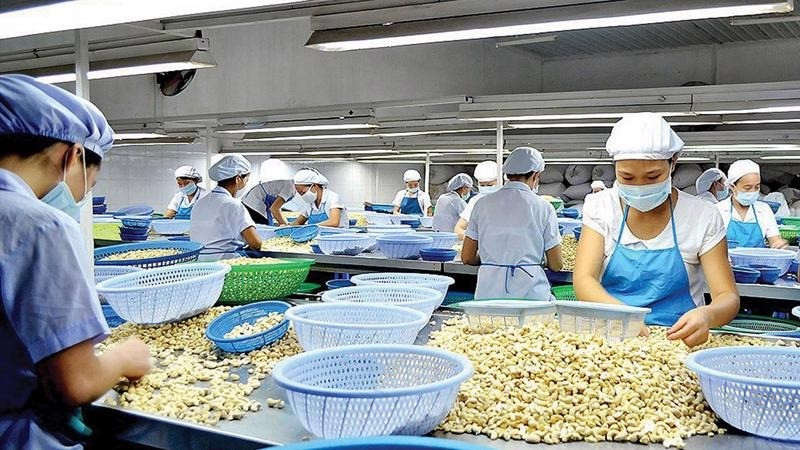
According to data from the General Department of Customs, in July this year, Vietnam exported 68,000 tons of cashew nuts, earning $460 million—an increase of 1.3% in volume and 11% in value compared to the same period in 2024. Cumulatively over seven months, exports reached 413,000 tons worth $2.8 billion, marking an 18.3% increase in value.
The average export price over the seven-month period was $6,805 per ton, up 21.4% year-on-year. This is the highest price in recent years, reflecting growing global demand for nutritious nuts.
In the first seven months of the year, China, the U.S., and the Netherlands remained Vietnam’s top three cashew markets, accounting for 22.4%, 20.3%, and 9.1% of market share respectively. Notably, China has overtaken the U.S. to become the number one market.
Exports to China reached 96,000 tons worth $608 million, up nearly 29% in volume and 47% in value compared to the same period in 2024. In July alone, China spent nearly $83 million to import over 13,000 tons of cashews, accounting for nearly 20% of Vietnam’s total cashew exports that month.
Mr. Bach Khanh Nhut, Vice Chairman of the Vietnam Cashew Association (Vinacas), commented: “Cashew exports to China have surged in the past one to two months as Chinese traders are stocking up food supplies for the upcoming Mid-Autumn Festival.”
According to the Import-Export Department, the increase in cashew exports to China since the beginning of the year is due to the recovery of the Chinese economy, rising demand for healthy agricultural products, and Vietnamese businesses being more proactive in meeting Chinese partners’ requirements.
In contrast, exports to the U.S. have declined significantly. Over seven months, Vietnam exported 83,000 tons worth $561 million to the U.S., down 27.5% in volume and 11.7% in value year-on-year. The main reason is the U.S. government’s imposition of retaliatory tariffs since July, raising the rate to 20%. The increased costs have eroded Vietnam’s competitive edge, forcing U.S. importers to cut orders or switch to alternative sources like Côte d’Ivoire and Brazil.
Data from the U.S. International Trade Commission also shows that in the first half of the year, Vietnam remained the largest cashew supplier to the U.S., accounting for over 87% of the market share. However, shipment volume dropped by 10% compared to the same period last year. The average import price from Vietnam was $6,941 per ton—much higher than some other sources—making it harder to sustain demand.
Maintaining the world’s leading export position for 18 consecutive years
Vinacas believes that the trend toward healthy snacking is driving demand, helping Vietnamese cashew kernels maintain their competitive edge.
For 18 consecutive years, Vietnam has been the world’s largest exporter of cashew kernels, accounting for over 80% of global output. In 2024, Vietnam exported 730,000 tons worth $4.37 billion, up 20.2% compared to 2023. With the current growth momentum, the target of $4.5 billion in 2025 is considered achievable, especially as consumption typically spikes during year-end holidays and festivals.
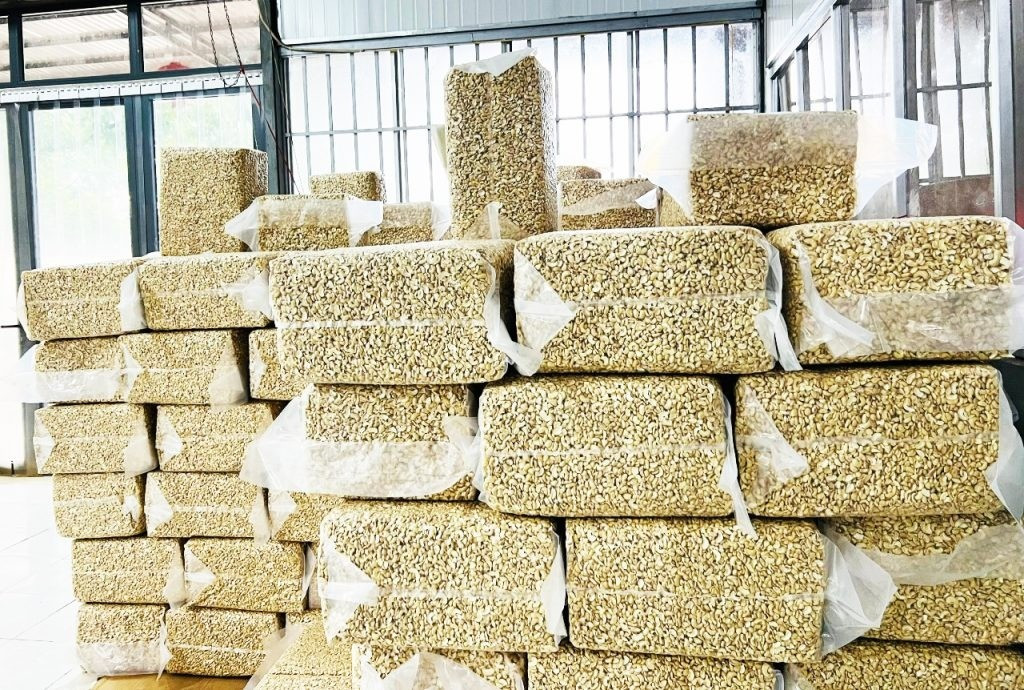
However, the cashew industry still faces many challenges.
Both the U.S. and the EU are imposing increasingly stringent standards on traceability, pesticide residue levels, and sustainable production requirements. In particular, in the U.S., competition in terms of tariffs and pricing from African countries may reduce Vietnam’s market share.
Nevertheless, with advantages in deep processing, stable supply, and strong brand reputation, Vietnam’s cashew industry is still expected to maintain its leading position. According to Vinacas, the growing trend of consuming ready-to-eat products is opening up new opportunities. While the U.S. has reduced imports of raw cashew kernels, imports of processed cashew products have increased by more than 30% in the first half of this year.
Currently, Vietnam has about 306,000 hectares of cashew cultivation, with the 2024–2025 crop yield estimated at 311,000 tons. The Ministry of Agriculture and Environment is implementing measures to ensure origin transparency, digital traceability, sustainable raw material zone development, and the building of a national brand.
By Thanh Huyen
Source: Tien Phong Newspaper