Old Packaging, Incorrect Labels – Businesses Face Risks
In early July 2025, the Vietnam Cashew Association (Vinacas) received reports that some companies importing raw cashew nuts from Africa were using old packaging with information inconsistent with the actual goods.
According to Vinacas, many imported cashew bags displayed the name of a country different from the actual exporting nation. Some bags had even previously contained other products such as fish or macadamia nuts. During phytosanitary inspection, Plant Quarantine Sub-Department Region 2 sent official documents to customs authorities at various ports, requesting verification of origin and appropriate handling measures for violations.
In response, Vinacas worked with the Customs Authority to propose solutions for businesses, as a large volume of raw cashew nuts was still en route or had already been containerized for shipment to Vietnam.
On July 22, the General Department of Customs issued a written response to Vinacas, clarifying that verifying the origin of goods and conducting phytosanitary inspections are two separate specialized management activities.
Phytosanitary inspections are conducted independently, based on specialized legal regulations, and are not contingent on the results of origin verification or violation handling by the Customs Authority.
Therefore, it is inappropriate and legally unfounded for the quarantine agency to delay phytosanitary procedures for imported shipments while waiting for customs verification of origin or violation handling (if any).
Regarding labeling regulations for imported goods, the General Department of Customs cited Clause 3, Article 3 of Decree 43/2017/ND-CP, which defines the original label as the first label affixed by the manufacturer or responsible organization on the product or its commercial packaging. Article 10 of the same decree, amended by Clause 5, Article 1 of Decree 111/2021/ND-CP, requires that the original label of imported goods into Vietnam must include the following information in a foreign language or in Vietnamese at the time of customs clearance: “Name of the goods; country of origin; name or abbreviation of the manufacturer or the organization/individual responsible for the goods abroad.”
Accordingly, during customs clearance, the Customs Authority will rely on current regulations and compare them with the actual imported shipment to verify the mandatory information on the original label as required.
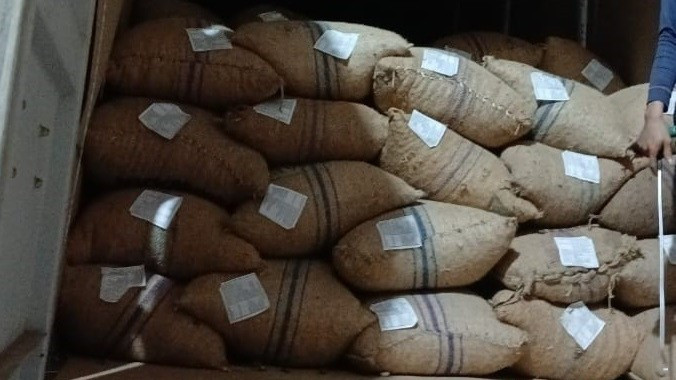
If foreign exporters of raw cashew nuts use old packaging with outdated labels, they must provide a new original label for the goods in accordance with regulations; failure to do so or incorrect labeling will result in administrative penalties as prescribed.
Based on current legal documents and the concerns raised by Vinacas, the General Department of Customs stated that in cases where businesses use old packaging with labels affixed to such packaging, the original label of imported goods must fully display the mandatory information during customs clearance. Customs authorities will use this information to inspect and compare the actual imported shipment with the customs documentation.
If the original label of imported goods fails to display all required information or contains incorrect details during customs clearance, it will be deemed non-compliant with Article 10 of Decree 43/2017/ND-CP, as amended by Clause 5, Article 1 of Decree 111/2021/ND-CP, and will be subject to administrative penalties.
Therefore, the General Department of Customs recommends that Vinacas guide its member enterprises to comply with current regulations and contact the relevant regional Customs Sub-Departments for specific instructions.
The Customs Department also suggested that if further issues arise regarding labeling of imported goods, Vinacas should contact the Ministry of Science and Technology, which is the lead agency responsible for drafting Decree 43/2017/ND-CP and Decree 111/2021/ND-CP, for detailed guidance.
Warning from Raw Cashew Import Practices
According to some businesses, a significant volume of raw cashew nuts is still en route to Vietnam or has already been containerized for shipment. Many of these shipments may lack new product labels on the packaging.
Vinacas noted that in practice, many Vietnamese cashew businesses pay little attention to packaging and labeling when importing raw cashew nuts. They often accept suppliers' use of old jute bags with incorrect origin information and fail to affix or print labels in accordance with Vietnamese regulations, despite clear legal requirements.
This poses considerable risks, especially as authorities intensify efforts to combat counterfeit goods, trade fraud, and enforce transparency in origin labeling to protect domestic production and consumers, meet international economic integration standards, and promote fair, transparent, and healthy business practices among nations.
In light of these developments, Vinacas urges businesses to promptly review all contracts, especially for shipments en route or about to be exported to Vietnam. If any shipment lacks a new original label but has complete and valid import-export documentation and is confirmed to be raw cashew nuts, Vinacas requests that authorities allow customs clearance.
In the long term, the association advises businesses to amend or supplement packaging and labeling clauses in existing contract appendices. For new contracts, partners should be required to use new packaging and print product labels in compliance with Vietnamese law (as stipulated in Clause 5, Article 1 of Decree 111/2021/ND-CP regarding “mandatory content on labels of imported goods”).
Source: TRUNG HƯNG - nhandan.vn